Halifax Home Solar. Own Your Energy. Power Your Future.
Take control of your home’s energy future.
Residential Solar
Grid-tied solar systems use advanced technology, but the way they work is straightforward and reliable.
Solar panels capture sunlight and convert it into electricity in the form of direct current (DC). This electricity flows to an inverter, where it is converted into alternating current (AC) the type of power your home uses every day. From there, the electricity connects directly to your home’s electrical panel, supplying clean energy just like power from your utility provider.
- Reduce or eliminate monthly electricity bills
- Protect against rising utility rates
- Increase home value
- Lower your carbon footprint
- Achieve long-term energy independence
- Reduce overhead
- How it works
How Grid-Tied Solar Works in Nova Scotia. And Why Net Metering Changes Everything
Solar energy in Nova Scotia works differently than many homeowners expect. When you install a grid-tied solar system, your home remains connected to the local utility grid while generating clean electricity from the sun. This setup allows you to power your home, reduce your energy bills, and take advantage of Nova Scotia’s net metering program.
Solar Panels Generate Electricity
Your solar panels capture sunlight and convert it into direct current (DC) electricity. An inverter then converts this electricity into alternating current (AC) that your home can use instantly to power appliances, lighting, and electronics.
Your Home Uses Solar Power First
During sunny hours, your home will automatically use the electricity generated by your solar panels before drawing any power from the grid. Less electricity purchased from the utility. Lower monthly energy bills. More control over rising energy costs
Extra Energy Goes Back to the Grid
Often, your solar system produces more power than your home needs, especially during the middle of the day. Instead of wasting that energy, it flows back into the utility grid through a bi-directional meter, which tracks electricity moving both into and out of your home.
Summer Solar Offsets Winter Power
Solar systems typically produce more electricity in summer when days are longer. Those extra credits accumulate and can be used to offset higher energy usage during winter months. For many homeowners, this means reduced annual electricity costs.
- Our Working Process
From Free Assessment to Your First NS Power Credit, OYO’s 5-Step Process
1. Free Solar Assessment
You’ll receive an estimate of:
- System size
- Potential energy production
- Expected savings
- Available rebates and incentives
2. Custom System Design
Next, our engineers design a custom solar solution tailored to your property. We carefully plan panel placement, inverter configuration, and system size to maximize energy production in Nova Scotia’s climate.
We also ensure your system is optimized for net-metering benefits.
3. Permits & Utility Approval
OYO Energy handles all the paperwork for you. We submit applications and coordinate approvals required for installation and connection to the grid.
Local permits. Electrical approvals. Utility interconnection applications. Net-metering registration
4. Professional Installation
Our certified installers complete your solar installation safely and efficiently. Most residential systems are installed in 1–2 days, depending on system size.
Mount solar panels securely. Install inverters and electrical equipment. Connect the system to your home’s electrical panel.
5. System Activation & Your First Energy Credit
Once inspections are complete, your system is activated and connected to the grid. When your solar system produces excess power, it flows back to the grid and earns net-metering credits on your utility account.
Savings
6 kW system | 6 kW System — ~$1,335 Saved Per Year at Current NS Power Rates |
10 kW system | 10 kW System — ~$2,227 Saved Per Year. Most Popular in Nova Scotia. |
15 kW system | 15 kW System — ~$3,341 Saved Per Year. Ideal for Higher-Use Homes. |
Payback | Typical Payback: 8–10 Years. Then 15+ Years of Near-Free Power. |
Years of experiances
Trusted by Clients
- Why Choose OYO Energy?
National Experience, Local Crew. Halifax to Cape Breton
OYO Energy integrates solar power seamlessly into your property, maximizing energy efficiency while minimizing environmental impact. Our tailored solutions are designed to meet your energy goals, whether it’s reducing bills, increasing resilience, or supporting sustainability.
- NS Power Rates Keep Rising. Your Solar Bill Never Will.
- Generate It. Use It. Bank It. Clean Energy That Pays You Back.
- 3,500+ Installs Across Canada. We Know What Works in Atlantic Weather.
- Halifax to Cape Breton, We Serve All of Nova Scotia & the Maritimes
- Zero Subcontractors. Your Crew from First Quote to Final Commission.
- We Handle All Permits, NS Power Interconnection & Utility Paperwork
Grid-tied solar systems use advanced technology
A grid-tied solar system is a simple, dependable solution for homeowners in Atlantic Canada who want to reduce energy costs and make a meaningful commitment to clean energy.
- Lower monthly electricity bills
- Protection against future rate increases
- Reliable and low-maintenance operation
- Reduced environmental impact
- Long-term return on investment
Residential Solar – Frequently Asked Questions
Nova Scotia Home Solar Questions. Straight Answers
If you couldn’t find the answer you were looking for in our FAQs, we’re here to help. Our friendly support team is ready to provide you with clear, personalized assistance. Simply send us an email, and we’ll respond as quickly as possible to ensure you get the information you need.
How do residential solar panels work?
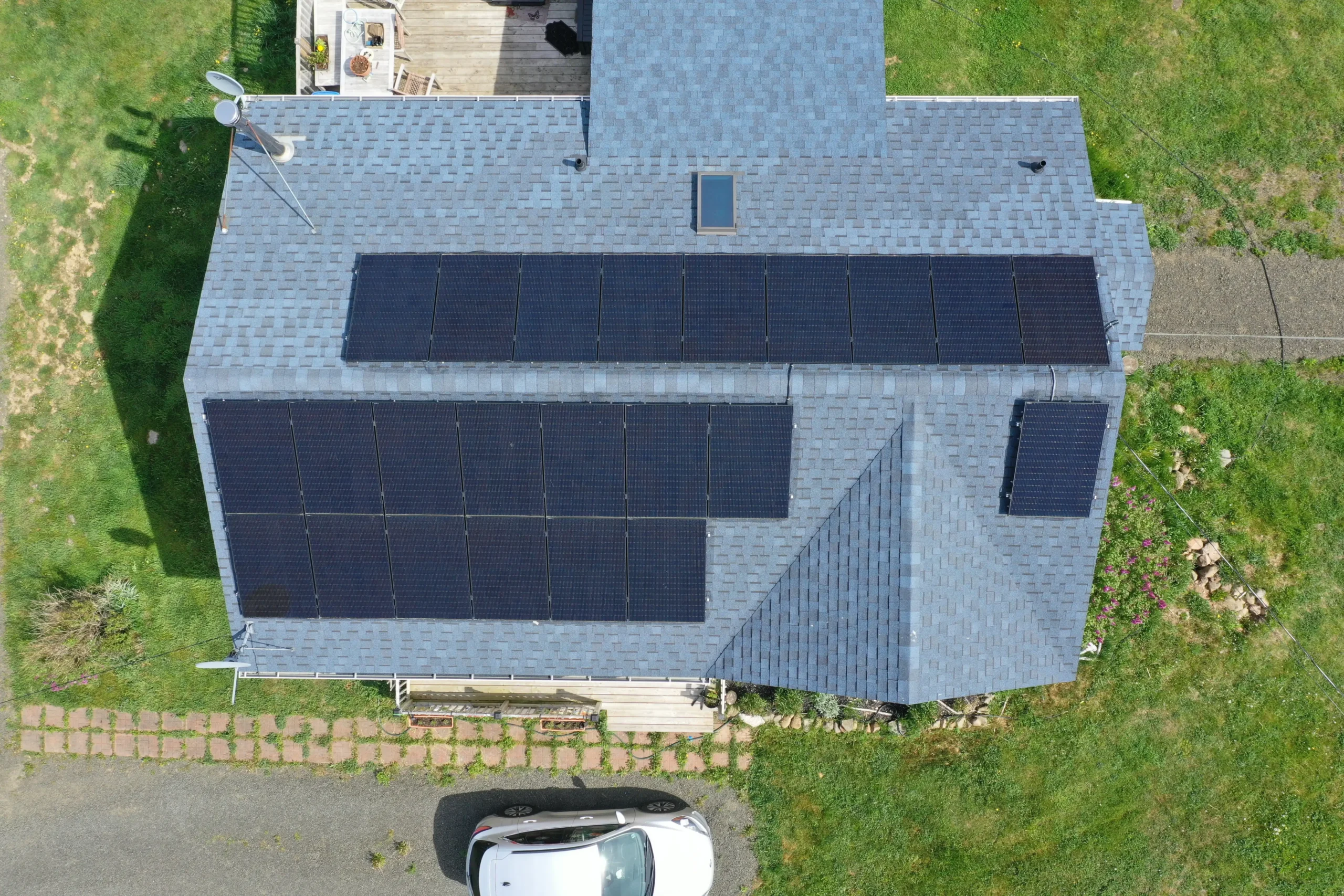
Solar panels capture sunlight and convert it into direct current (DC) electricity. An inverter then converts that DC power into alternating current (AC), which your home uses. Your home uses solar energy first, and any additional electricity needed is automatically supplied by the utility grid.
Will solar panels eliminate my electricity bill?
In many cases, solar can significantly reduce or even eliminate your electricity bill. The exact savings depend on your system size, energy usage, and local net metering policies. Most homeowners see substantial monthly savings and long-term financial benefits.
What happens during cloudy days or winter?
Solar panels still produce electricity on cloudy days, though at reduced levels. During winter months, production may vary depending on daylight hours and snow coverage. When your system produces less power than needed, your home automatically draws electricity from the grid.
What happens during a power outage?
Standard grid-tied solar systems shut down during outages for safety reasons. If you want backup power during outages, adding a battery storage system allows your home to remain powered when the grid goes down.
How long do solar panels last?
Most high-quality solar panels are designed to last 25–30 years or more. Inverters may need replacement during the system’s lifespan. Solar systems require minimal maintenance and are built for long-term reliability.
Will solar panels damage my roof?
When professionally installed, solar panels do not damage your roof. In fact, they can help protect the portion of the roof they cover from direct weather exposure. Our team evaluates roof condition and structure before installation to ensure suitability.
How much do solar panels cost in Nova Scotia in 2026?
An average 8–10 kW residential installation in Nova Scotia, the right size for most homes, typically ranges from $25,000 to $30,000 with most companies. OYO’s pricing is meaningfully lower than that, because we carry no national franchise overhead, no regional management layers, and no call centre costs. Those savings go directly onto your invoice. Every quote is fixed-price and all-in: panels, inverter, racking, wiring, permit fees, and full NS Power interconnection. No surprises after you sign. At today’s NS Power rate of $0.1856/kWh with another increase filed for 2026, most homeowners start saving from month one. OYO provides a written proposal within 24 hours of your free property assessment so you can see the exact numbers for your home before committing to anything.
How does NS Power net metering actually work?
When your solar system produces more electricity than your home needs common on sunny afternoons the surplus flows into the NS Power grid and earns a credit at the full retail rate of $0.1856/kWh. The same rate you pay when buying power. Credits roll over month to month through the calendar year. Summer surplus carries you through winter. Most OYO customers in Nova Scotia end the year owing nothing more than the basic grid connection fee of approximately $19.17/month. OYO handles your NS Power net metering enrollment as part of every installation. You don’t fill out a single form.
Are there solar rebates or incentives in Nova Scotia right now?
The Efficiency Nova Scotia Solar Homes residential rebate is currently paused it may return in 2026 and we’ll update this page the moment it does. Zero-interest PACE financing remains available, letting you fund your installation at 0% interest repaid through your property taxes. For commercial installations, government incentive programs are currently active and stack very well together see the Commercial Solar page for details on how OYO manages that process for you. Either way, with NS Power at $0.1856/kWh and rising, the financial case for solar is strong with or without a rebate.
Why is OYO’s pricing more competitive than national solar companies?
National solar companies carry overhead that adds nothing to your roof: franchise fees, national marketing budgets, regional managers, and call centres that go quiet after commissioning. OYO carries none of that. We’re a lean local team and our lower cost structure goes directly onto your invoice. Same Tier 1 panels, same quality inverters, same professional installation at a lower all-in price. Fixed written quote within 24 hours of your free assessment. No pressure, no financing markups disguised as discounts.
How do I know which solar company to trust in Nova Scotia?
Solar is a 20-year decision. The company you choose needs to still be answering the phone in year 15. Here’s what we’d tell any Nova Scotia homeowner or business owner to look for. Own crew or subcontractors? OYO uses our own certified installation team on every job, always. Track record: how many systems have they actually installed and where? OYO is a partnership between Canada’s most experienced national solar installers and Nova Scotia entrepreneurs personally invested in the clean energy future of this province 3,500+ installations across Canada since 2014. Local skin in the game: are the people behind the company actually here? OYO’s Nova Scotia partners live and work in this community. And clean energy commitment: are they just selling a product, or do they believe in what they’re building? Every OYO partner chose this industry because clean energy efficiency matters to them personally, not just commercially. Ask any solar company you’re considering these four questions. We’re comfortable with all of them.